Senior Living Truth Series
2027 Seminar Schedule

The Truth About Reinventing Retirement: Finding Purpose, Connection & Meaning in Your Next Chapter
You planned for retirement financially. But did you plan for what you would actually do with your life when you got there?
Read more about this event
Retirement is often talked about like a finish line. You work for decades, finally reach the day you no longer have to clock in - and then what?
For many people, retirement brings freedom, but it can also bring unexpected questions about identity, relationships, routine, friendships and purpose. Suddenly, the structure that work provided is gone. Your spouse may be home more than ever. Some of your friends may still be working. Your relationship with your children and grandchildren may change. You may finally have time to travel, volunteer, learn something new, start a second career or return to work simply because you want to.
The question becomes less about how to fill the hours and more about how to build a life that still feels meaningful.
We'll talk about practical ways to create connection, purpose, structure and enjoyment in retirement - and why this stage of life deserves just as much intention as the years that came before it.
Question We Are Answering: What do I want this next season of my life to look like - and what am I intentionally putting into it?
Come for the education. Stay for the community.
Francis Tuttle Technology Center - Portland Campus
3500 NW 150th St, OKC

The Truth About Your Digital Life: What Can Help, What Can Hurt & What You Should Never Trust Online
That profile looks real. That message sounds convincing. But how do you know who's actually behind the screen?
Read more about this event
More and more of everyday life happens through a screen.
We text family, bank online, shop from our phones, use social media, receive medical information through portals and meet people we may never see face-to-face.
That convenience also makes it harder to know what - or who - is real.
We'll talk about romance scams, fake profiles, suspicious texts and emails, social-media impersonation, online banking fraud, password security, what you should never click, and the ways artificial intelligence is making online deception more convincing.
This is not a technology class, and you do not need to understand every new app.
The goal is to help you recognize when something online does not add up - and know what to do before you respond.
Question We Are Answering: How do I use today's technology without trusting the wrong person, message or link?

The Truth About Living Alone: Is Your Independence Plan Strong Enough?
If something changed tomorrow, who would step in & would they know what you wanted them to do?
Read more about this event
Living alone and being alone are not the same thing.
Many people live independently for years and love it. But independence works best when there is a plan behind it.
If something changed tomorrow, who would know? Who could step in? Who has access to the information they would need? What happens when your closest family lives three states away - or when you do not have children or nearby family at all? What if the people you consider family are friends rather than relatives?
We'll talk about emergency planning, transportation, social connection, chosen family, legal authority, practical support and the resources available for people who do not have an obvious person waiting in the wings.
This is not a conversation about giving up independence. It is about building enough support around yourself that independence can last.
Question We Are Answering: If something changed tomorrow, do I have people and plans in place - or am I assuming someone will figure it out?
Come for the education. Stay for the community.
Francis Tuttle Technology Center - Portland Campus
3500 NW 150th St, OKC
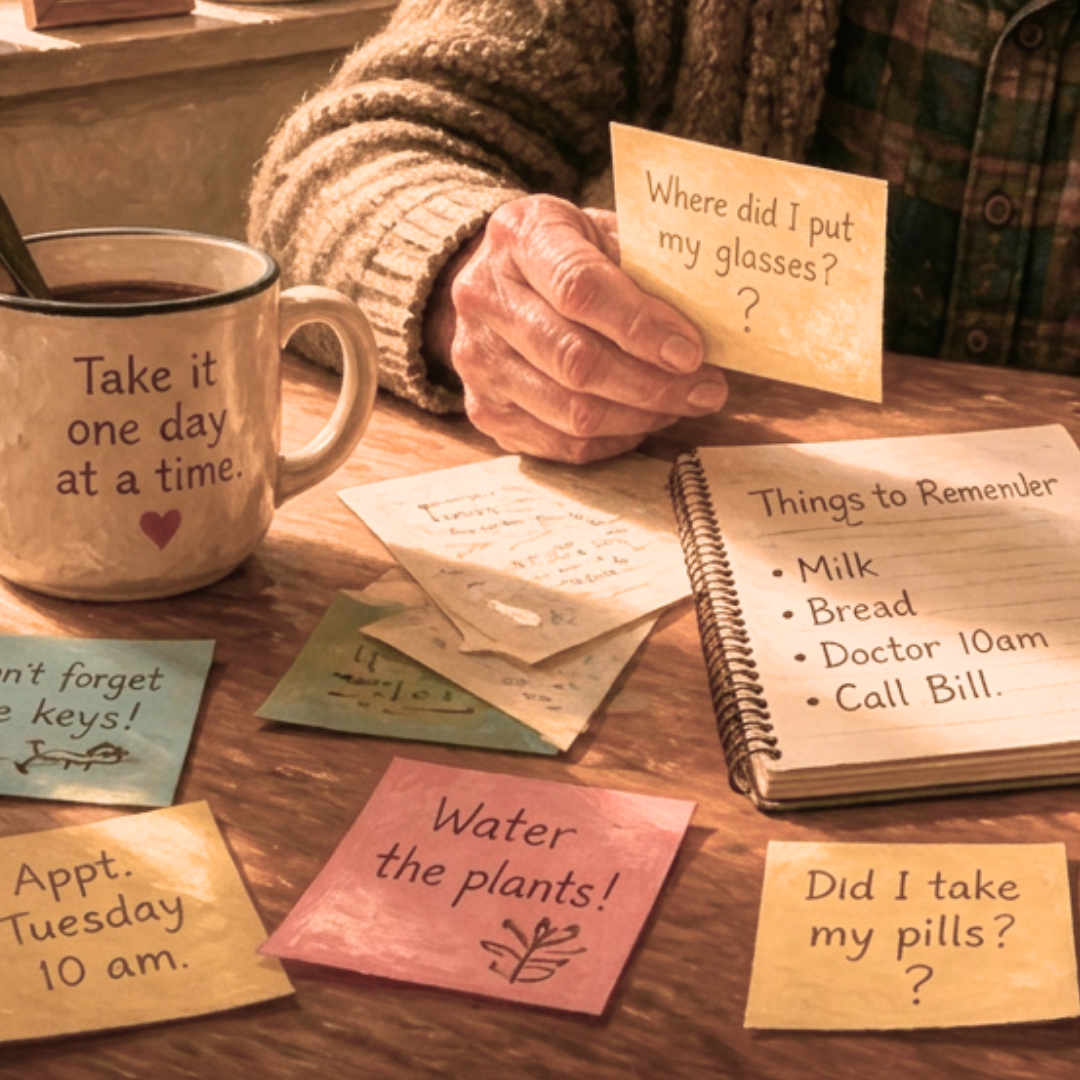
The Truth About Your Brain: What's Normal, What's Not & When to Ask
What red flags are you painting green because you really want them to be 'just aging'?
Read more about this event
You walk into a room and forget why you went in there. A name disappears from your memory. You lose your phone while you are talking on it.
Is that normal aging - or something you should pay attention to?
We'll talk about what cognitive changes commonly come with aging, which changes deserve a closer look and what an evaluation for memory or cognitive concerns actually looks like. We'll also discuss Alzheimer's disease and other forms of dementia, newer testing and diagnostic tools, and what families should do when they begin noticing changes.
The goal is not to make everyone afraid of forgetting a word or misplacing their keys. It is to help you understand the difference between a frustrating moment and a red flag worth discussing.
Question We Are Answering: What is normal aging, what is not, and when should I ask someone about it?
Come for the education. Stay for the community.
Francis Tuttle Technology Center - Portland Campus
3500 NW 150th St, OKC

The Truth About Who Decides When You Can't: What Happens When You No Longer Can Yourself
Your family may know exactly what you want. That does not always mean they are legally allowed to do it.
Read more about this event
Most of us assume that if something happens, the people we love will simply be able to step in.
Legally, it is not always that simple.
Who can make medical decisions for you? Who can manage finances or sign important documents? What does a Power of Attorney actually allow someone to do? When does guardianship become necessary? And what happens if the right documents were never put in place?
We'll explain the basic legal tools that determine who can act on your behalf, what can happen when those tools are missing, and why making these decisions while you still can gives you far more control over who may eventually have to make them for you.
Question We Are Answering: If I could no longer make a decision for myself, have I actually given the right person the authority they would need?

The Truth About Moving Before You Have To: Why Waiting Can Leave You With Fewer Choices
The worst time to learn your options may be the week you suddenly need one.
Read more about this event
Most people do not want to make a move because they have to.
They want time to think, compare options, decide what to keep, understand the finances and make the choice on their own terms.
But waiting until after a fall, hospitalization, death of a spouse or sudden change in health can turn a thoughtful decision into an urgent one.
We'll talk about what planning ahead actually looks like, why timing affects your options, how to evaluate whether your current home is still working for you, and what different housing and senior living choices may be available. We'll also talk about what happens to the house when the timeline becomes shorter than expected - and how fast-sale or investor options fit into the picture.
Sometimes selling quickly makes sense. Sometimes speed comes at a significant cost. The goal is to understand the choices before urgency makes the decision for you.
Question We Are Answering: How do I keep control of the moving process instead of letting a crisis make the decision for me?
Come for the education. Stay for the community.
Francis Tuttle Technology Center - Portland Campus
3500 NW 150th St, OKC

The Truth About Being the Caregiver: When Helping Becomes Too Much
When did helping become caregiving - and when did caregiving become your whole life?
Read more about this event
Most caregivers do not wake up one morning and decide to become a caregiver. It happens gradually.
You start helping with appointments. Then medications. Then meals. Then bathing. Nights become interrupted, plans get cancelled and the person you love slowly becomes the center of almost every decision you make.
We'll talk about caregiver burnout, guilt, boundaries, sibling dynamics, respite, safety and the difficult moment when the current plan is no longer sustainable.
We'll also talk about something that is often overlooked: caregiving can affect the caregiver's finances, career and retirement too. Reduced work hours, missed opportunities and lost income can quietly become part of the cost of caring for someone.
And underneath all of it is the relationship itself. Sometimes you miss being the spouse, daughter, son or friend because caregiving has taken over.
Asking for help is not abandoning someone. Sometimes it is what allows you to continue loving them well.
Question We Are Answering: How do I know when helping someone I love has become more than I can safely and sustainably carry?
Come for the education. Stay for the community.
Francis Tuttle Technology Center - Portland Campus
3500 NW 150th St, OKC

The Truth About Senior Living Today: What Are Your Options Before You Need Them?
If your picture of senior living still involves a hallway full of walkers, you may be making decisions with information that's 20 years out of date.
Read more about this event
For many people, the phrase 'senior living' still brings one picture to mind.
But where and how people live as they age looks very different today.
Some choose 55+ or active-adult communities. Some move into patio homes. Some live with adult children or build multigenerational homes. Others choose independent living, assisted living, memory care or communities that offer several levels of support in one place.
We'll talk about what these options actually mean, who they are designed for, what questions you should ask before choosing one, and how to tell the difference between what looks good on a tour and what will actually work for your life.
Learning about your options does not mean you are ready to move tomorrow.
It simply means that if your needs or priorities ever change, you will not be starting from zero.
Question We Are Answering: What are my real living options as I age - and how do I know which one might actually fit me?

The Truth About What Happens After the Hospital: What You Need to Know Before They Send You Home
'You're being discharged tomorrow.' Great. Now where exactly are you supposed to go & and who decided?
Read more about this event
A hospital stay can happen quickly. The discharge often happens even faster.
Suddenly someone is talking about rehabilitation, home health, outpatient therapy, equipment, medications and follow-up appointments - and families are trying to make decisions while exhausted and overwhelmed.
We'll explain what the different levels of post-hospital care actually mean, what questions you should ask before discharge, how to know whether the home is ready, and why the first recommendation you hear may not be your only option.
We'll also talk about something many people do not realize: you have the right to understand your choices and ask questions about where your recovery happens.
The goal is to help you leave the hospital with more than discharge paperwork. You should understand the plan.
Question We Are Answering: Before I leave the hospital, do I actually understand what happens next and what choices I have?
Come for the education. Stay for the community.
Francis Tuttle Technology Center - Portland Campus
3500 NW 150th St, OKC
The Truth About Family Money: When Helping Hurts
How do you keep helping someone you love without becoming the reason they never learn to help themselves?
Read more about this event
Helping family is part of being family.
Parents help adult children. Grandparents help grandchildren. Families step in when someone loses a job, goes through a divorce, struggles financially or simply needs a hand.
But sometimes it becomes difficult to tell where helping ends and dependency begins - especially when money, guilt, complicated relationships, blended families or expectations about inheritance enter the picture.
We'll talk honestly about how to be generous without losing healthy boundaries, how money can change family relationships and how to recognize when a pattern of helping is no longer helping anyone move forward.
This is not about telling you what you can or cannot do with your money. It is about making sure generosity and love are not the only things making the decision.
Question We Are Answering: How do I help the people I love without losing healthy boundaries or jeopardizing my own financial future?
Come for the education. Stay for the community.
Francis Tuttle Technology Center - Portland Campus
3500 NW 150th St, OKC

The Truth About Selling a House Quickly: How to Protect Your Equity When Time Matters Most
A fast sale can save you stress. It can also cost you tens of thousands of dollars if you do not know what you're signing.
Read more about this event
Sometimes homeowners have months to prepare for a sale.
Sometimes life gives them weeks, or even days.
A hospitalization, move to care, death in the family or sudden financial change can create pressure to sell quickly. That is often when homeowners are most vulnerable to making an expensive decision simply because they do not understand all of the available options.
We'll compare investor and cash offers, traditional sales, selling as-is, making repairs, fees, timelines and the questions every homeowner should ask before signing anything.
Fast is not automatically bad. Traditional is not automatically better.
What matters is understanding what you are gaining and what you may be giving up for the speed and convenience you need.
Question We Are Answering: What is the smartest way to sell when life does not give me unlimited time?

The Truth About Driving & Independence: How Do You Know When It's Time to Change the Plan?
Nobody wants their keys taken away. So what can you do now to keep your independence longer?
Read more about this event
For most adults, driving represents far more than transportation. It represents freedom.
The ability to go to the grocery store, meet a friend, attend church, see a doctor or simply leave the house without asking anyone for a ride is deeply connected to independence. That is why conversations about driving can become so emotional.
We'll talk about physical and cognitive changes that can affect driving, medications, vision, reaction time, newer vehicle safety technology and the warning signs that may mean something needs to change.
We'll also talk about ways to preserve independence even if driving eventually looks different.
This is not a seminar about taking away someone's keys. It is about protecting independence for as long - and as safely - as possible.
Question We Are Answering: How do I protect my independence while still being honest about changes that may affect my driving?
Come for the education. Stay for the community.
Francis Tuttle Technology Center - Portland Campus
3500 NW 150th St, OKC

The Truth About Health Changes: What's Normal, What's Not & What Should You Never Ignore?
When is 'I'm probably fine' exactly the wrong thing to tell yourself?
Read more about this event
Aging brings changes. But not every change should automatically be blamed on getting older.
Maybe you feel more tired than usual. Your balance seems different. You notice weakness on one side. Your speech feels strange. You are short of breath doing something that normally would not bother you.
Sometimes the easiest thing to tell ourselves is, 'I'm probably fine.'
We'll talk about the changes older adults commonly dismiss or explain away, which warning signs deserve immediate attention, and why catching a change early can affect what happens next.
We'll look at concerns such as stroke and heart-related warning signs, balance and weakness, changes in speech or stamina, and other symptoms that should not simply be written off as age.
The goal is not to make you panic over every ache. It is to help you know when 'wait and see' is not the best plan.
Question We Are Answering: What changes are part of aging - and which ones mean I need to act?
Come for the education. Stay for the community.
Francis Tuttle Technology Center - Portland Campus
3500 NW 150th St, OKC

The Truth About Caring for Someone You Love: What Happens When the Current Plan Stops Working?
If the plan only works because one exhausted person is holding everything together, is it really still working?
Read more about this event
Most care plans work - until they don't.
A spouse becomes more frail. A parent starts needing help at night. The person living at home needs more support than anyone expected. A family caregiver is doing everything they can, but the arrangement that once worked no longer feels sustainable.
When that happens, families often feel like they have failed.
In reality, care needs change. Sometimes the plan has to change with them.
We'll talk about how to recognize when the current arrangement is no longer working, what additional support can be brought into the home, when rehabilitation or senior living may become appropriate, where hospice fits, and how families can make changes before the situation completely falls apart.
Changing the plan does not mean you failed.
Sometimes it means you finally responded to what the person needs now.
Question We Are Answering: How do we know when the current care plan has stopped working - and what do we do next?
The Truth About the Last Things: What Your Family Will Wish You Had Planned
What kind of legacy are you leaving behind; and have you made your wishes clear enough for the people you love to carry it forward?
Read more about this event
When someone dies, the people they love are grieving - but they are also suddenly responsible for dozens of decisions.
Who needs to be called? What did you want for your funeral or memorial? Where are the important documents? What happens to the bank accounts, the car or the house? Who pays the remaining bills? Where are the passwords and account information? Who handles your personal belongings? Did you have charitable or legacy wishes that anyone knows about?
This is not simply a funeral-planning seminar.
It is a practical conversation about what the person responsible for your affairs may actually face after you die; and what you can organize, communicate and decide now so the people you love are not left guessing at the worst possible time.
Question We Are Answering: What can I put in place now so the people handling my affairs after I die are not left trying to figure everything out while they are grieving?
Come for the education. Stay for the community.
Francis Tuttle Technology Center - Portland Campus
3500 NW 150th St, OKC
***Date subject to change to October 7th - Will be finalized by January 1st***

The Truth About Who's Really on the Other End? Scams, Impersonation & How to Know Who You Can Trust
If the voice on the phone sounded exactly like someone you love, would you know what to ask before you trusted it?
Read more about this event
Today's scams do not always look like scams.
The person on the phone may know your name. The text may look like it came from your bank. An email may appear to be from a government agency. A voice may even sound exactly like someone you love.
Technology has made it easier than ever for someone to create urgency, impersonate a trusted person or organization, and make you feel like you have to act immediately.
We'll talk about today's phone, text, email, banking, government, romance and impersonation scams; how artificial intelligence is changing what scammers can do; what warning signs should make you stop; and what questions can help you verify who is really contacting you.
The goal is not to make you distrust everyone. It is to make sure urgency does not take away your ability to slow down and verify.
Question We Are Answering: When someone contacts me unexpectedly, how do I verify who I'm really dealing with before I act?
Come for the education. Stay for the community.
Francis Tuttle Technology Center - Portland Campus
3500 NW 150th St, OKC
The Truth About Peace of Mind: What Did You Put Off This Year?
Remember that thing you said you were finally going to take care of this year? How'd that go?
Read more about this event
All year long, we've talked about the decisions that are easier to make before a crisis.
Now it is time to look back.
What did you learn this year? What conversation did you finally have? What document did you update? What question did you ask? What decision are you still avoiding? And which topic did you hear months ago, promise yourself you would handle - and then quietly push back to the bottom of the list?
This year-end conversation will revisit some of the most important lessons from 2027, reconnect you with resources from throughout the year and help you identify the one or two things you still want to address before another year gets away from you.
Bring your SLTS folder and your Truth-to-Action Sheet.
We're going to see how much ground you actually covered - and what you do not want a future crisis deciding for you.
Question We Are Answering: What have I handled - and what am I still waiting for a crisis to force me to do?
Come for the education. Stay for the community.
Francis Tuttle Technology Center - Portland Campus
3500 NW 150th St, OKC